
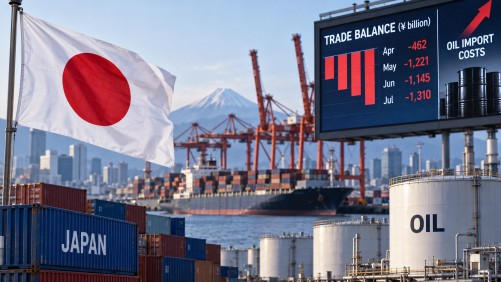
Japan’s escalating trade deficit, which reached approximately 1.1 trillion yen ($7 billion) in August, highlights the economic challenges posed by soaring oil prices. This marks the fourth consecutive month of trade shortfalls for the country, driven by increased costs for energy imports amid ongoing geopolitical tensions.
Data from Japan’s Finance Ministry reveals that the nation’s imports surged by 28% from a year earlier, totaling 11.15 trillion yen ($71.9 billion). This increase is attributed primarily to higher energy costs as conflicts in the Middle East disrupt oil supplies and shipping routes. Japan, heavily dependent on imported energy, finds itself particularly vulnerable to these fluctuations, with disruptions in the Strait of Hormuz further exacerbating the situation.
In contrast, Japan’s exports demonstrated a robust rise of 19.3% year-on-year, reaching 10 trillion yen ($64.5 billion). The growth was fueled by strong demand for automobiles and computer chips, sectors where Japan maintains a competitive edge. Notably, exports to the United States climbed by 24.9%, while imports from the US saw an even steeper rise of 55.2%, indicating a deepening trade relationship between the two nations.
Trade with European countries also experienced growth, with exports increasing by 11% and imports climbing by 20.4%. However, Japan’s trade with the Middle East saw a decline, with exports dropping by 5.2% and imports decreasing by 4.2%. These figures reflect the broader regional instability that continues to impact economic activities.
The persistent trade deficits underscore the challenges Japan faces in balancing its energy needs with global supply chain disruptions. As the country navigates these economic hurdles, the government and businesses alike are under pressure to adapt and mitigate the impact of external shocks on the national economy.