
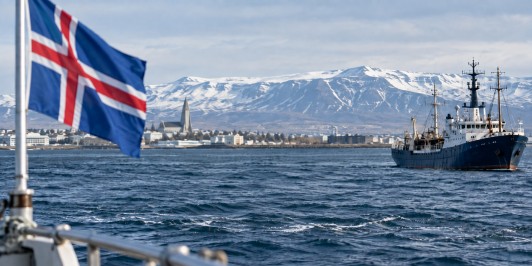
Iceland is set to make a significant shift in its wildlife conservation policies by introducing legislation aimed at permanently banning commercial whaling. This legislative move, expected to be submitted to the parliament in February, would position Iceland alongside the growing global consensus against whaling, leaving only Japan and Norway as the remaining nations engaged in the practice. The potential ban has been a subject of intense debate over the years, particularly fueled by opposition from various animal welfare and conservation organizations.
Currently, Iceland’s whaling industry predominantly targets fin whales, a species classified as vulnerable. Despite this classification, the industry has continued to operate under a government-approved quota during the hunting season, which spans from June to September. The proposed legislative ban has garnered strong backing from animal welfare advocates who argue against commercial whaling on ethical, environmental, and conservation grounds.
Iceland’s history with commercial whaling dates back to 2006, when it resumed the practice despite an international moratorium that was put in place in 1986 to safeguard whale populations. Norway followed suit in 1993, and Japan later withdrew from the International Whaling Commission in 2019, resuming commercial whaling in its territorial waters and exclusive economic zone. Should Iceland’s proposed legislation pass, it would mark a pivotal moment, isolating Norway and Japan as the only countries continuing with commercial whaling activities.
The international moratorium on commercial whaling, however, maintains allowances for indigenous communities in specific regions, such as parts of Greenland and Alaska, enabling them to hunt whales for nutritional, cultural, and traditional purposes. This exception underscores the moratorium’s acknowledgment of the cultural significance of whaling practices among indigenous peoples, while still aiming to protect whale populations globally.