
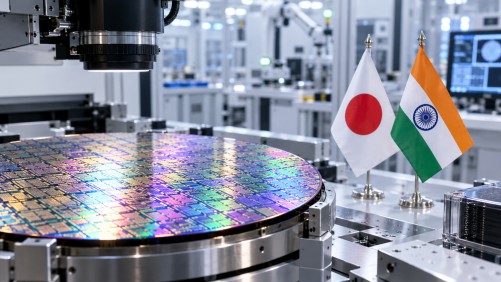
Japanese semiconductor-related companies are increasingly establishing a presence in India as the nation seeks to build its domestic chip manufacturing industry. At the forefront of this movement, more than 30 Japanese companies took part in the Semicon India 2026 event in New Delhi. Here, industry leaders from both countries discussed potential investment opportunities, technology partnerships, and supply chain development.
India is striving to position itself as a global semiconductor hub, focusing on areas such as chip materials, design, manufacturing, packaging, and testing. To support this ambition, the Indian government is ramping up efforts to enhance domestic semiconductor capabilities and develop a skilled workforce.
Notably, several Japanese companies are already collaborating with Indian firms to further these goals. Fujifilm has partnered with Tata Electronics to work on advanced semiconductor materials, while Sumitomo Chemical is exploring potential collaborations on semiconductor material supply chains. Additionally, Enomoto is expected to provide support in production technology.
In a significant move to address the skills gap, Tokyo Electron plans to establish a training center in Gujarat by 2027. This facility aims to develop engineers with expertise in semiconductor manufacturing equipment, a critical step as India faces a shortage of workers with specialized semiconductor skills despite its large pool of engineering talent.
Industry officials assert that the growing involvement of Japanese companies will play a key role in facilitating technology transfer, workforce development, and the creation of a robust semiconductor supply chain within India. This collaboration is seen as crucial for strengthening India’s position in the global semiconductor industry.