
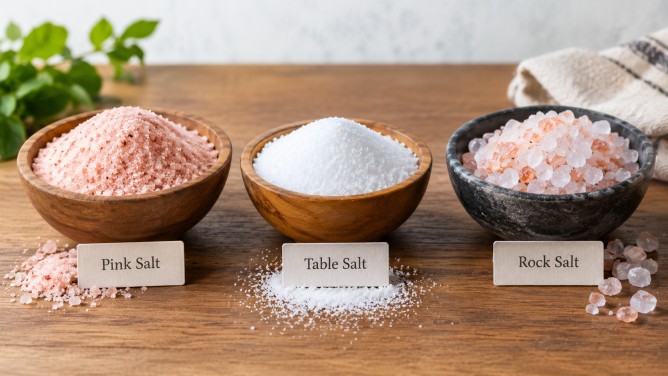
When it comes to ensuring adequate iodine intake, not all salts are created equal. Iodine is a crucial mineral for thyroid health, aiding in the production of hormones that regulate metabolism and other vital functions. As the body cannot produce iodine, it must be consumed through food, with iodised salt being an accessible source. However, the choice between iodised table salt, pink Himalayan salt, and rock salt can significantly impact iodine intake.
Iodised table salt stands out as a reliable source of iodine, provided it is correctly labelled. During manufacturing, iodine is added to table salt to help meet dietary needs. However, not all table salt is iodised, so checking the packaging is essential. Despite the benefits, it’s important to use it in moderation, as excessive sodium intake can lead to health issues like high blood pressure.
Pink Himalayan salt, known for its unique color and trace minerals, may not be a dependable iodine source unless specifically fortified. Its aesthetic appeal and natural reputation don’t necessarily translate into nutritional adequacy. While it can be enjoyed for its taste and texture, relying solely on pink salt for iodine without supplementation might fall short.
Similarly, traditional rock salt, often used in Indian cooking, varies in its natural mineral content and typically lacks sufficient iodine unless fortified. Substituting iodised table salt entirely with rock salt could lead to a deficiency, especially if the diet lacks other iodine-rich foods.
The daily recommended iodine intake for most adults is around 150 micrograms, with increased needs during pregnancy and breastfeeding. Besides iodised salt, iodine can be sourced from dairy products like milk and yogurt, eggs, seafood, and fortified foods. Those on vegetarian or vegan diets should be mindful of their iodine sources to ensure adequate intake.
When selecting salt, the key is to verify its iodised status and store it properly to maintain its quality. While iodised salt is a practical choice for iodine intake, it should be part of a balanced diet to support overall health. Consulting with healthcare professionals is advisable for those with thyroid disorders or specific dietary restrictions to tailor iodine intake appropriately.