
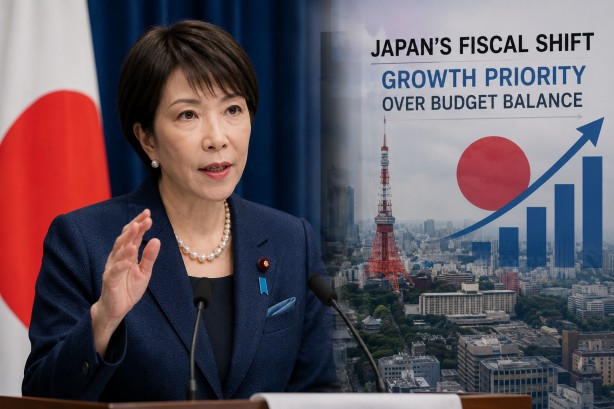
Japan has unveiled a transformative economic policy under the leadership of Prime Minister Sanae Takaichi, signaling a departure from the traditional emphasis on fiscal consolidation. The new approach focuses on fostering economic growth and ensuring long-term fiscal sustainability, rather than pursuing an annual primary budget surplus. This strategic shift aims to gradually decrease the public debt-to-GDP ratio, a measure that will be bolstered by plans to secure over ¥370 trillion in both public and private investment across pivotal sectors, including artificial intelligence, by 2040.
As part of the policy, there are proposals for temporary reductions in food consumption taxes and a boost in defense spending. These elements have sparked debate over the financing methods, as experts highlight the potential challenges. Economists caution that the success of this strategy heavily relies on consistent economic growth and maintaining low interest rates, both of which are currently unpredictable.
The ambitious policy framework has captured the attention of financial markets, which are poised to scrutinize Japan’s forthcoming budgetary decisions. Investors and analysts will be keenly observing how the government plans to balance its extensive spending ambitions with the goal of achieving long-term fiscal stability.
This economic recalibration represents a critical juncture for Japan as it seeks to navigate the complexities of global financial dynamics while addressing domestic needs. The outcome of these measures will likely shape Japan’s economic landscape and its ability to sustain growth in the coming decades.