
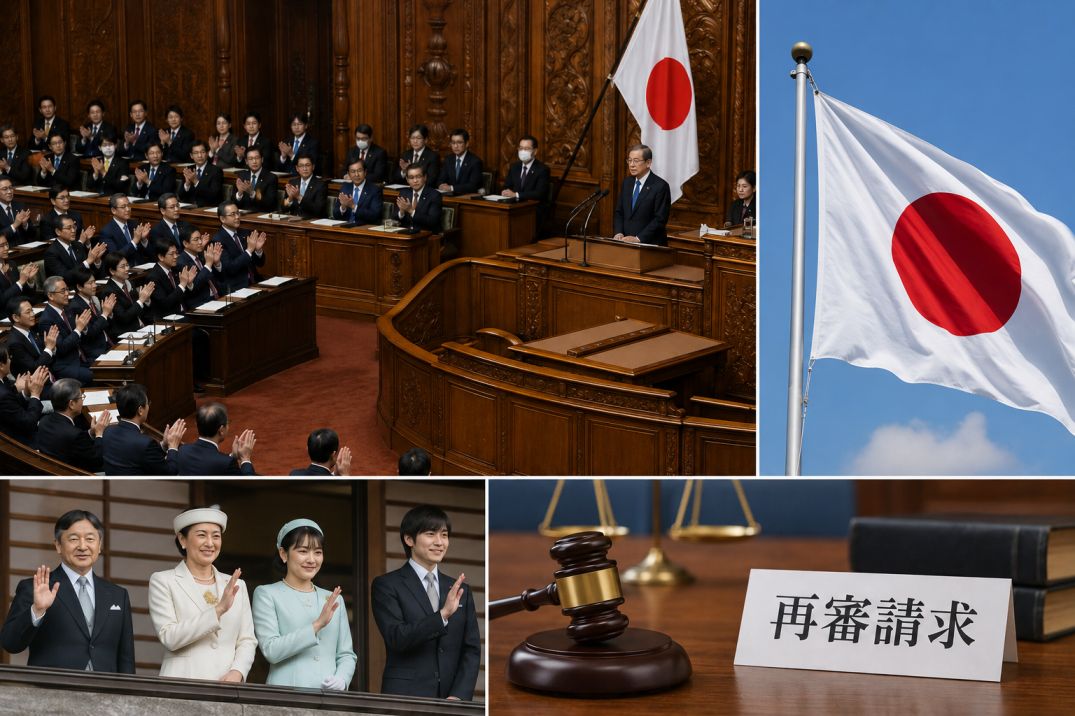
Japan’s parliament has enacted a trio of significant legislative measures, marking notable developments in the country’s legal landscape. Among these is the first substantial amendment to the Imperial House Law since 1947. This revised law is designed to bolster the imperial succession framework by allowing female members of the imperial family to maintain their royal status after marriage and by permitting the adoption of male heirs from former imperial branch families.
In a move aimed at protecting national symbols, lawmakers have also passed a new law that criminalizes the public desecration of Japan’s national flag. Under this legislation, individuals found guilty of such acts could face penalties of up to two years in prison or a fine of 200,000 yen. Proponents argue that it safeguards national dignity, though critics express concerns over potential implications for freedom of expression.
Additionally, reforms to the criminal retrial process have been approved, aiming to expedite reviews of wrongful conviction cases. Despite the intention to reduce delays, the measure has met with some opposition. Several parties have raised objections, claiming that the reforms do not sufficiently enhance transparency or the disclosure of evidence, which are critical for ensuring justice in retrials.
The passage of these laws reflects Japan’s ongoing efforts to address both traditional and contemporary challenges in its legal and societal frameworks. The revision of the Imperial House Law, in particular, highlights a significant shift in addressing issues of succession within the imperial family, while the new flag desecration law underscores a focus on national pride. Meanwhile, the criminal retrial reforms demonstrate a commitment to refining the justice system, despite debates over their adequacy.